

Mobility isn’t glamorous. It isn’t loud, fast or impressive.
But it might be the single biggest factor in whether your body feels good today - and 10 years from now.
Ask any physio working with elite athletes and they’ll tell you the same thing: mobility is the foundation on which all training sits.
Without it, strength is compromised, speed suffers and injury risk climbs.
And the good news? It only takes a few minutes a day to make a huge difference.
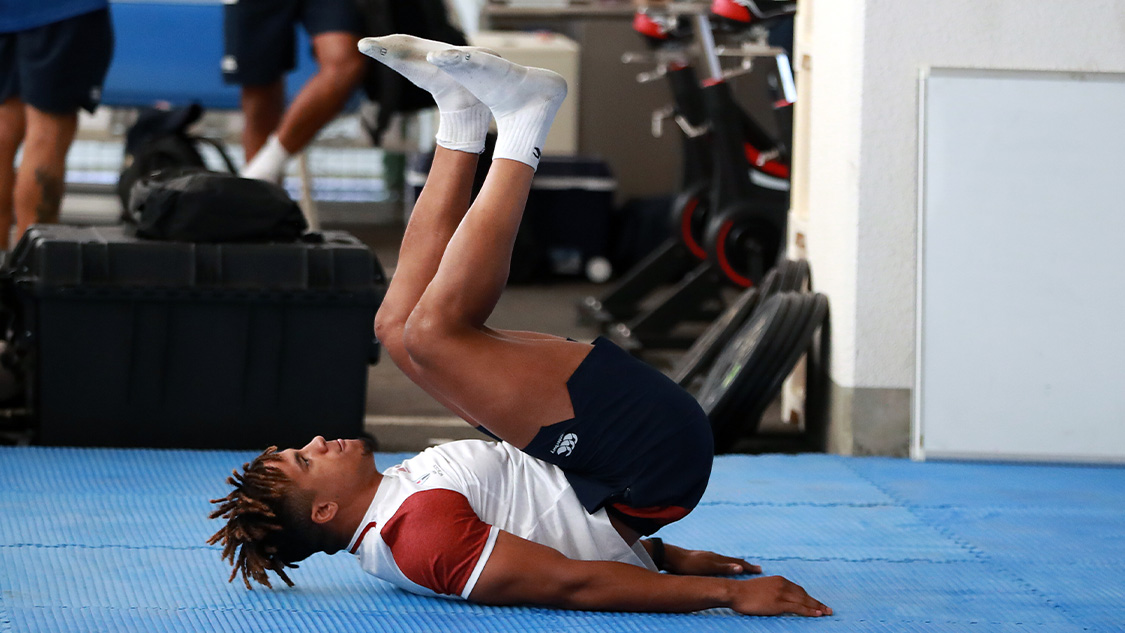
England and Lions winger Anthony Watson spoke openly in a Telegraph interview about rebuilding his body after an achilles tear - and how mobility became the non-negotiable part of his routine.
"When I came back from the achilles injury, mobility was the thing that gave me confidence again," he said.
"It wasn’t the heavy lifting - that came later. It was the small movements, the loading patterns, the angles.
"Mobility is what lets me trust my body again. I do it every day now. If I skip it, I feel it. When I’m on top of it, I move better, I recover better and I feel sharper."
Anthony's point is simple: mobility isn’t optional - it’s structural.
Why mobility matters
For expert insight, we turn to Lyndsay Horan, a consultant physiotherapist and lecturer in musculoskeletal performance.
Here’s how she breaks it down:
1. Mobility reduces tightness before it becomes injury
"Most injuries don’t come out of nowhere," Horan explains. "They come from restricted movement patterns repeated over time."
2. It improves strength output
A more mobile joint allows muscles to contract more fully - meaning more power, without more effort.
3. It improves recovery
Mobility work boosts blood flow and reduces post-training stiffness. "Think of it like brushing your teeth - a small daily habit that prevents big problems."
4. It boosts energy
Light mobility stimulates the nervous system gently, helping you feel more awake and less sluggish.
A simple daily mobility routine
This takes six minutes and you can do it at your desk, in your kitchen, or before a workout.
You don’t need equipment. You don’t need space. You just need consistency.
1. Thoracic twists (1 minute)
Stand tall, rotate through your upper spine, switching sides.
Benefits: loosens mid-back, improves posture.
2. Hip circles (90 seconds)
Slow, controlled circles - in both directions.
Benefits: reduces lower-back load, improves stride length.
3. Ankle rocks (1 minute)
Lean into a bent knee while keeping your heel down.
Benefits: essential for walking, running and squatting.
4. Cat-cow (1 minute)
Deep breaths, slow transitions.
Benefits: spine mobility plus nervous system reset.
5. Shoulder openers (90 seconds)
Interlock fingers, raise arms overhead, then open wide.
Benefits: releases upper-body tension, counteracts desk posture.
The takeaway
Mobility is low effort, high reward. It keeps you moving well, keeps you training consistently, and keeps injuries at arm’s length.
And six minutes a day is enough to start feeling the difference.