
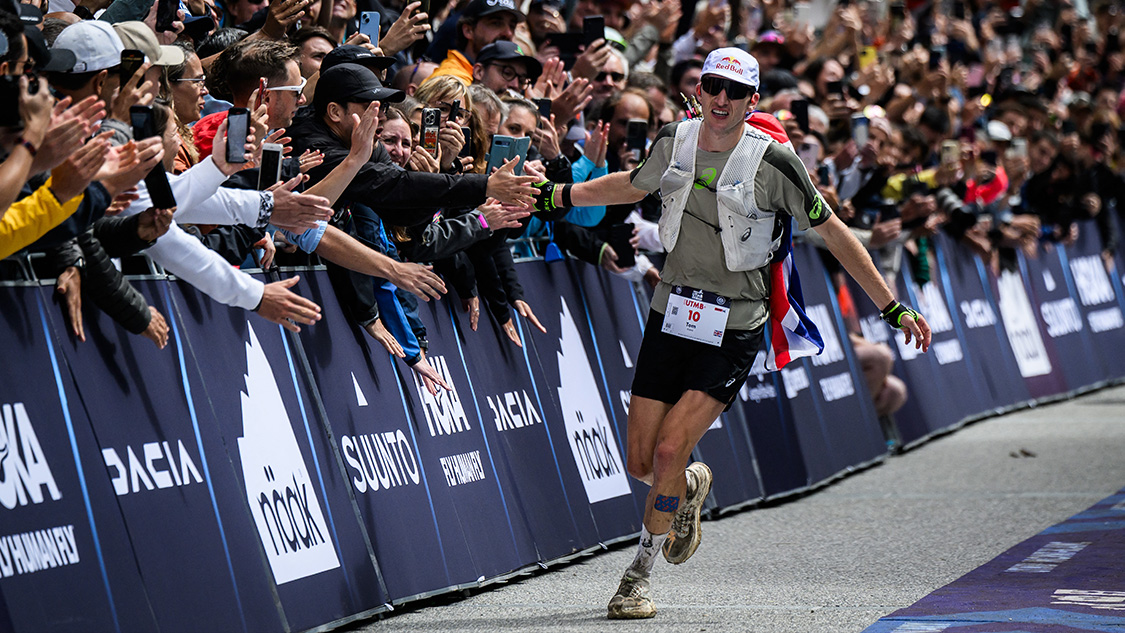
You might expect one of the world’s leading ultra-runners to be all about mileage.
But Tom Evans, a 4CAST athlete and the winner of the Western States 100, says the opposite.
Strength training isn’t his extra. It's his foundation.
"Strength keeps me resilient. Without it, the miles would break me," says Tom.
"It is absolutely crucial because you can’t just run and expect your body to cope with everything you’re asking it to do.
"Strength keeps me robust and improves everything - technique, mobility, power. If you don’t do it, you won’t be resilient enough."
This isn’t just an ultra-running philosophy. It’s a universal one.
So why does strength training work? Here's some expert insight from Dr. Jess Piasecki, a strength and biomechanics coach from Nottingham Trent University:
"Strength training improves neuromuscular control, joint stability and movement economy," she says.
"Whether you're running, lifting or playing a sport, these qualities determine how efficiently and safely you move."
Dr. Piasecki also notes that two sessions per week is enough for most people to see major benefits.
So what should you actually do?
Read on for a simple, athlete-approved structure.
1. Lower-body power to build stability and force:
- Split squats
- Step-ups
- Hip thrusts
2. Upper-body control to balance posture and protect your shoulders:
- Bent-over row
- Push-ups
- Overhead press
3. Core and rotation to train the foundation for all movement:
- Pallof press
- Dead bugs
- Woodchops
Why strength is the glue
Strength makes everything else better:
- Running economy
- Speed
- Power output
- Joint protection
- Explosive movement
- Longevity
As Tom Evans says, strength isn’t optional. It’s what lets you do more of what you love - and keep doing it for years.