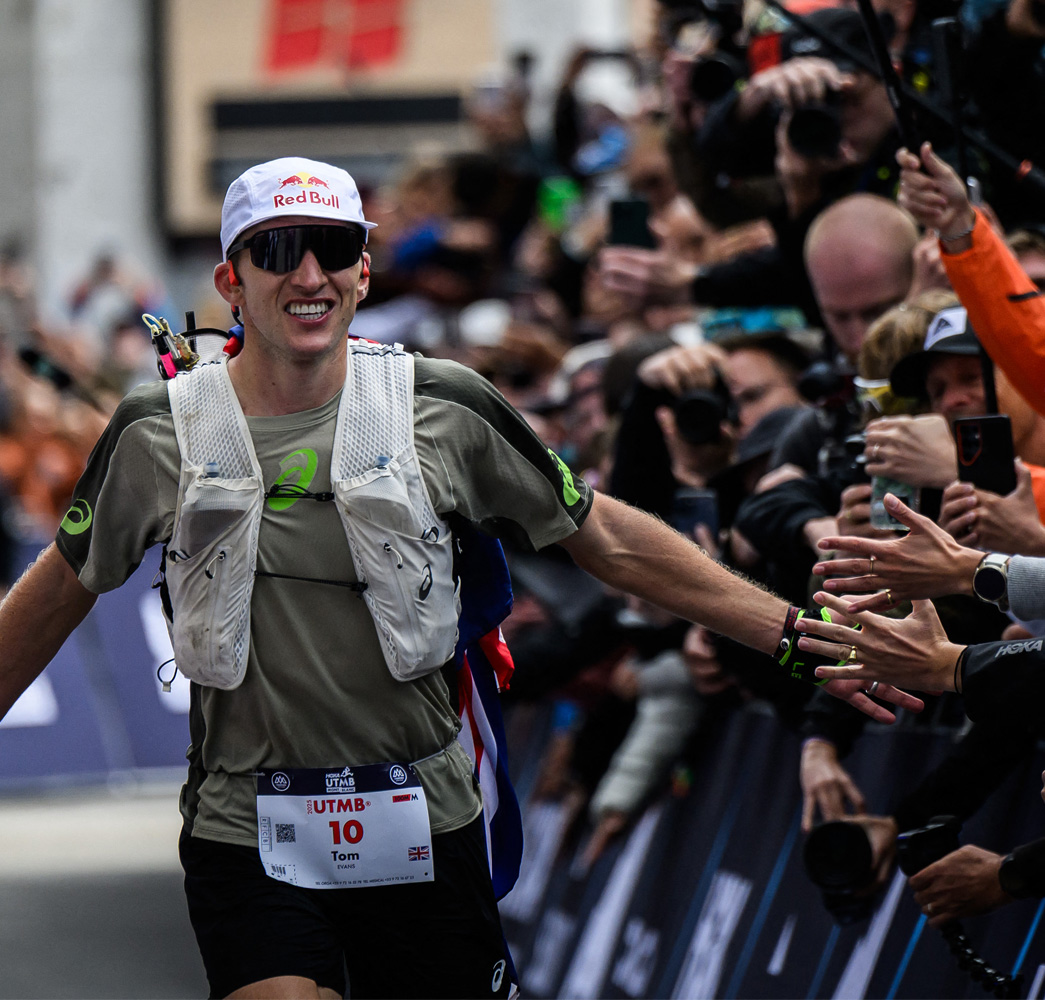

Few athletes understand fuelling with the precision and pragmatism of Tom Evans.
One of the world’s leading ultra-runners, Tom treats energy intake as a strategy, not a side note - a performance tool as important as pace or shoes.
On his podcast, The Ultra Sound, Tom explains how he adapts his fuelling for training and racing, how he simplifies the complexity of sports nutrition, and why energy is ultimately a currency.
Train to time, fuel to time
Most runners chase miles. Tom chases hours - because hours tell you what your body really spent.
“Nutrition and mileage are always super-closely linked because the more you train, the more you need to eat," he says.
"I tend not to measure in distance anymore because if you ran 100 miles in Chamonix and 100 miles in London, one would take three times longer than the other.
"So I tend to now measure in hours of training, rather than distance. So my nutrition is all pretty much based on per hour."
It’s a simple shift, but a game-changing one: fuel for the demand, not the number on the watch.
Tom adds: "The energy expenditure and how much it ‘costs’ to do the amount of exercise is the amount of food I then need to consume around training."
Energy is a bank balance - spend and replace
Where some athletes think of food emotionally or instinctively, Tom thinks economically.
“My strategy for my nutrition changes on a daily basis," he says. "It’s like a bank balance. The more you spend, the less you have.
"In order to keep a stable bank balance you need to put in what you intend to take out.”
Low-training day? Spend less, deposit less. Big session coming? Fuel up first.
“If you have days where you don’t spend very much, you don’t need to put as much in," adds Tom. "But if you’re about to spend loads, you might need to put a little bit more in, and then once you’ve spent it you need to restock it."
It’s a mindset that keeps Tom's energy consistent and his performances stable.
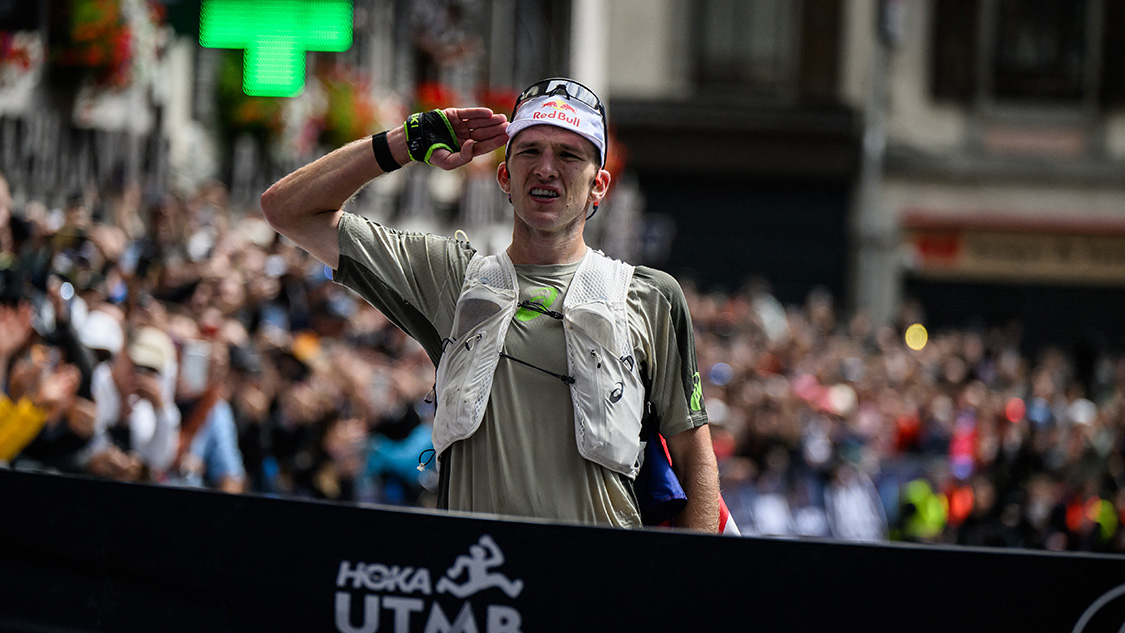
Fuelling a big day - ultra style
When Tom trains for UTMB - the world’s most gruelling ultra - his intake reflects the scale of the effort.
“If I’m having a big day - specific to UTMB for example - it would probably be a six or seven-hour run, and then maybe an hour in the gym," he says.
And his fuelling is never random. "I take each run on its own merits," he says, "so there will be some runs that I’ll do like a race replication, where I am practising my nutrition for a race."
Everything is rehearsed so that on race day, fuelling is automatic.
The formula that works
When it comes to the race itself, Tom is clear and methodical about what he takes in - and how much.
"So if you take UTMB for example, with a race like that I tend to average around 115 grams of carbohydrate per hour. As for what that looks like, it changes a lot."
His routine is built for simplicity:
“I take on a real mixture of fuel for that sort of race. My standard would be a Morton 320 drink mix, which is 80 grams of carbohydrate, and then a Morton gel 160 which is 40 grams of carbohydrate."
No complicated maths. No guesswork mid-run.
"That makes it super easy because running is hard enough without having to think about how many calories I’m consuming," says Tom.
"And like I said, if you’re ‘spending’ it you need to refill it, so 120 grams is a bottle and a gel, and for me that’s so easy. That would be my standard intake, my in-race skeleton.”
What everyday athletes can take from this
You don’t need to be racing in the Alps to learn from Tom's approach to nutrition:
1. Fuel based on time and effort, not distance
2. Adapt intake based on training 'spend'
3. Practise fuelling on long runs
4. Keep race-day nutrition simple and repeatable
For anyone training through winter, building marathon foundations, or simply trying to avoid energy crashes, Tom’s philosophy is a masterclass in sustainable, smart fuelling.